


Soft capsules have become one of the most widely used dosage forms in the pharmaceutical and nutraceutical industries due to their excellent bioavailability, ease of swallowing, and ability to encapsulate liquid and semi-solid formulations. However, maintaining consistent soft capsule quality can be challenging because gelatin shells are highly sensitive to environmental humidity.
Excessive moisture or unstable humidity during production, drying, packaging, and storage can lead to capsule deformation, sticking, leakage, brittleness, and inconsistent product performance. To overcome these challenges, many manufacturers are investing in soft capsule dehumidification dry rooms to create stable low-humidity environments that improve product quality and reduce production defects.
Why Humidity Control Is Critical for Soft Capsule Manufacturing
Soft gelatin capsules contain a delicate balance of water within the shell structure. During manufacturing, environmental humidity directly affects capsule drying speed, shell strength, elasticity, and final product stability.
When humidity levels are too high, manufacturers may encounter:
- Capsule sticking and agglomeration
- Shell deformation
- Surface tackiness
- Extended drying times
- Mold growth risks
- Increased product rejection rates
Conversely, excessively dry environments can cause:
- Capsule cracking
- Brittleness
- Reduced elasticity
- Packaging failures
A properly designed soft capsule dehumidification dry room ensures optimal humidity conditions throughout the manufacturing process.
Common Soft Capsule Defects Caused by Poor Environmental Control
Capsule Sticking
High humidity prevents proper moisture evaporation from gelatin shells, causing capsules to stick together during drying and storage.
Capsule Deformation
Unstable humidity can lead to uneven moisture distribution within the capsule shell, resulting in shape irregularities.
Leakage Problems
Excess moisture may weaken capsule sealing integrity, increasing the risk of leakage.
Shell Cracking
Rapid or uncontrolled drying can remove moisture too quickly, causing shell fractures and brittleness.
Reduced Shelf Life
Improper environmental conditions accelerate product degradation and negatively affect long-term stability.
How Soft Capsule Dehumidification Dry Rooms Work
Modern pharmaceutical dry rooms use advanced environmental control systems to maintain stable temperature, humidity, airflow, and cleanliness levels.
Key technologies include:
Desiccant Rotor Dehumidification
Desiccant rotor systems continuously remove moisture from process air and maintain low-humidity conditions regardless of outdoor weather.
Precise Humidity Control
Automated sensors monitor environmental conditions in real time and adjust system performance accordingly.
Temperature Management
Stable temperature control supports uniform drying and prevents shell stress.
Air Filtration Systems
HEPA filtration helps maintain pharmaceutical cleanroom standards while reducing contamination risks.
Benefits of Advanced Soft Capsule Dehumidification Dry Rooms
Improved Product Quality
Consistent environmental control minimizes moisture-related defects and improves capsule appearance.
Higher Production Yield
Reduced rejection rates increase manufacturing efficiency and profitability.
Faster Drying Process
Optimized humidity conditions shorten drying times and improve throughput.
Enhanced Product Stability
Controlled moisture levels help maintain capsule integrity during storage and transportation.
GMP Compliance
Environmental control systems support regulatory requirements for pharmaceutical production.
Dryair Soft Capsule Dehumidification Solutions
As pharmaceutical manufacturers seek higher production standards, selecting the right environmental control partner becomes increasingly important.
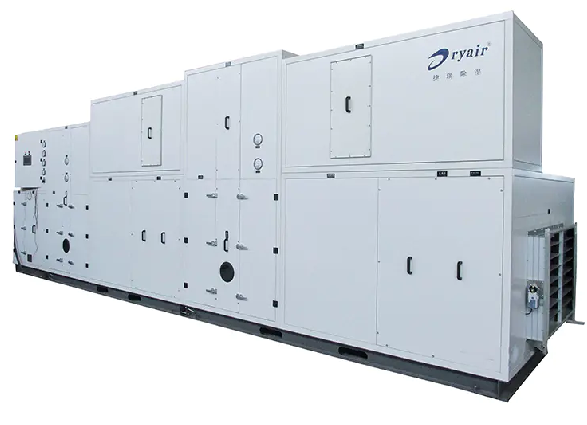
Dryair specializes in pharmaceutical dehumidification systems and soft capsule dehumidification dry rooms designed to meet the demanding requirements of modern pharmaceutical manufacturing.
With extensive experience in low-humidity environmental engineering, Dryair delivers customized solutions that help manufacturers improve product consistency while reducing operating costs.
Why Choose Dryair?
Dryair systems offer:
- High-efficiency desiccant dehumidification technology
- Stable low humidity control
- Intelligent PLC automation systems
- Energy-saving operation
- GMP-compliant environmental design
- Customized pharmaceutical engineering solutions
Whether for pharmaceutical capsules, nutraceutical supplements, herbal products, or specialty formulations, Dryair provides reliable humidity control solutions tailored to each production process.
Applications Beyond Soft Capsules
Although primarily used in soft capsule manufacturing, pharmaceutical dry rooms are also widely applied in:
- Tablet production
- Powder processing
- API manufacturing
- Nutraceutical production
- Pharmaceutical packaging
- Clean storage facilities
This versatility allows manufacturers to maintain consistent environmental conditions across multiple production stages.
Supporting Sustainable Pharmaceutical Manufacturing
Modern pharmaceutical facilities are increasingly focused on sustainability and operational efficiency.
Advanced dehumidification dry rooms help manufacturers:
- Reduce product waste
- Lower energy consumption
- Improve production efficiency
- Extend equipment lifespan
- Minimize environmental impact
By integrating intelligent environmental controls, manufacturers can achieve both quality and sustainability goals.
Conclusion
Humidity control is one of the most important factors affecting soft capsule quality. Defects such as sticking, leakage, deformation, and cracking can often be traced back to inadequate environmental management.
Advanced soft capsule dehumidification dry rooms provide a reliable solution for maintaining optimal production conditions, reducing defects, and improving product consistency.
With customized pharmaceutical dehumidification solutions from Dryair, manufacturers can create stable low-humidity environments that support higher quality standards, greater efficiency, and long-term business success.
Post time: Jul-14-2026